GOCO VINA SERVICE

School Catering

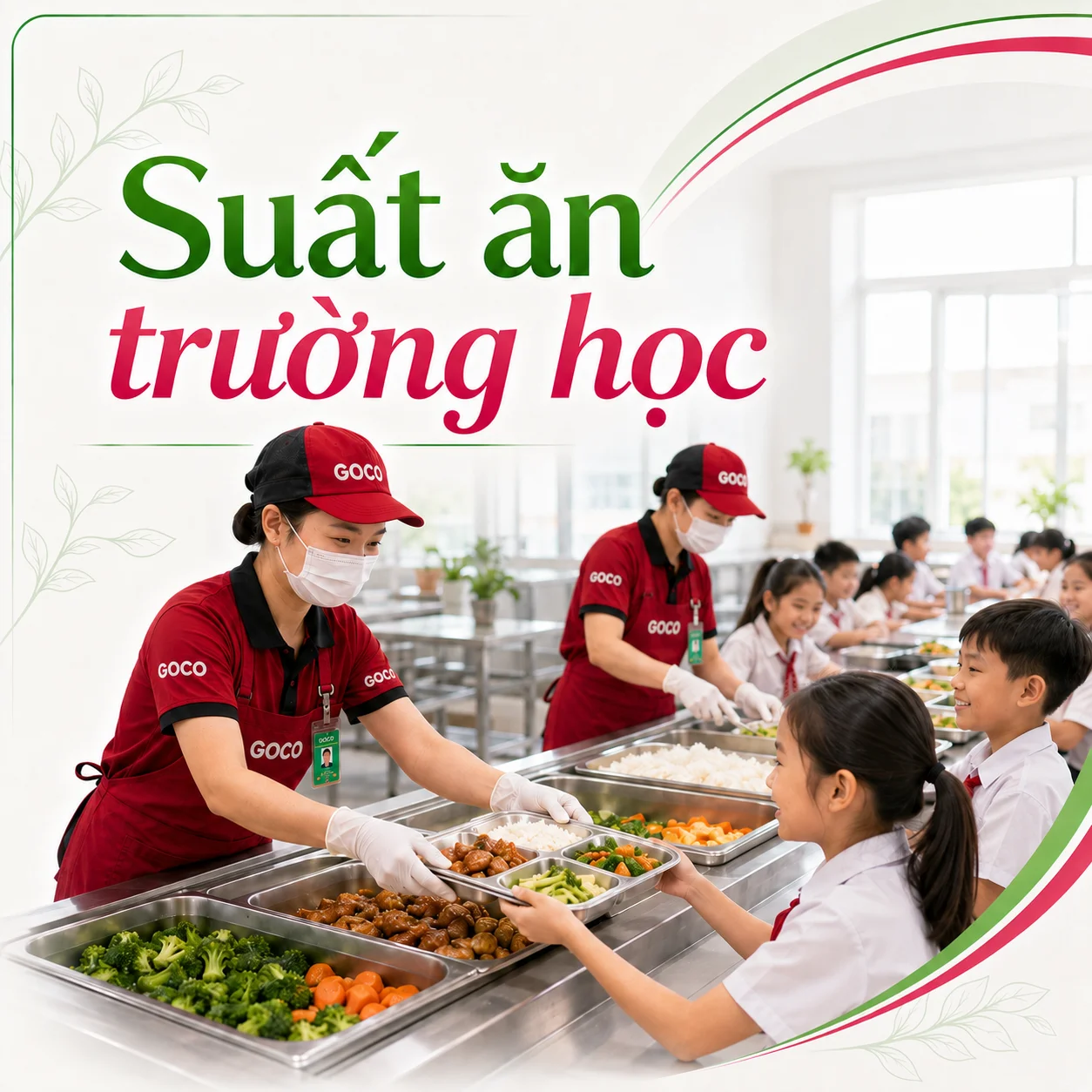
School catering must protect children while also helping them build positive eating habits, maintain energy and participate fully in the school day.

Đọc tiếng Việt
School Catering
50+Project implementation
20+Provinces and cities
500+Employees
200,000+Meals every day
CORE VALUE

A practical, controllable operating model

Every model is designed around actual client conditions rather than a generic package.

Adjust portions and textures by age group

Converted into practical controls and measurable indicators.

Manage allergies through clear identification

Converted into practical controls and measurable indicators.

Introduce healthy foods gradually and positively

Converted into practical controls and measurable indicators.

Organize serving flow to protect eating time

Converted into practical controls and measurable indicators.

Review waste and feedback with the school

Converted into practical controls and measurable indicators.

IN-DEPTH CONTENT

From assessment to operation and improvement

01

Meals Designed Around Age and Development

Adjust portions and textures by age group

Children at different ages have different nutritional needs, portion capacities and eating skills. Menu planning should consider energy, protein, vegetables, texture, seasoning and the time available for the meal.

The same dish may need different portion sizes or preparation methods across age groups. Younger children often benefit from softer textures and simpler presentation, while older students may need greater variety and energy.

For school catering, GOCO VINA converts these requirements into practical and auditable standards: defined inputs, clear ownership, operating records and a response process for deviations. Clients can therefore review performance through evidence rather than isolated impressions.
02

Assessment and Operating Requirements

Adjust portions and textures by age group

The assessment phase clarifies the real requirements before a school catering service is designed. GOCO VINA reviews user volume, service windows, facilities, equipment, budgets, safety expectations and special operating conditions.

The output is more than a current-state description. The team identifies the gap between existing capability and the required outcome, then prioritizes items such as Site and demand assessment, Operating model and service plan, Menu and portion framework and Food-safety control program. Lower-priority investment can be placed on a roadmap to prevent unnecessary cost.

Each requirement is connected to an acceptance criterion and approval owner. This makes the implementation of school catering more transparent, reduces last-minute changes and creates a reliable baseline for post-launch evaluation.

03

Food Safety and Allergy Management

Manage allergies through clear identification

School meals require careful control from ingredient receiving to service. Young users may be more vulnerable to foodborne illness, so hygiene, temperature, cleaning and employee health standards must be consistently applied.

Allergy and special-diet information should be collected through a defined process and communicated only to the employees responsible for preparation and service. Clear identification reduces the risk of a meal reaching the wrong student.

For school catering, GOCO VINA converts these requirements into practical and auditable standards: defined inputs, clear ownership, operating records and a response process for deviations. Clients can therefore review performance through evidence rather than isolated impressions.
04

Encouraging Healthy Food Acceptance

Introduce healthy foods gradually and positively

Children do not always accept unfamiliar vegetables or dishes immediately. Gradual introduction, attractive presentation and pairing new foods with familiar choices can improve acceptance over time.

Menus should avoid relying only on the most popular foods. A school meal program also has an educational role in helping students experience a wider range of ingredients and balanced meal structures.

For school catering, GOCO VINA converts these requirements into practical and auditable standards: defined inputs, clear ownership, operating records and a response process for deviations. Clients can therefore review performance through evidence rather than isolated impressions.

05

Resources, Coordination and Contingency

Organize serving flow to protect eating time

A strong model only performs when people, suppliers, equipment, logistics and information are coordinated through one plan. GOCO VINA defines responsibilities, handover points and decision rights for common operating scenarios.

Resources are calculated around actual capacity rather than unnecessary excess. The plan includes primary capacity, reasonable reserves, ingredient or equipment alternatives and continuity procedures when volume or schedules change.

Direct client value includes Adjust portions and textures by age group, Manage allergies through clear identification, Introduce healthy foods gradually and positively and Organize serving flow to protect eating time. These outcomes are reviewed from mobilization and trials through full operation so that the model remains practical at site level, not only on paper.

06

Creating a Calm and Efficient Meal Period

Organize serving flow to protect eating time

Serving flow, seating, supervision and clean-up all affect the dining experience. Long waiting times reduce the time available to eat and may increase noise or food waste.

The school and caterer should define responsibilities for student movement, special meals, incident reporting and communication with families.

For school catering, GOCO VINA converts these requirements into practical and auditable standards: defined inputs, clear ownership, operating records and a response process for deviations. Clients can therefore review performance through evidence rather than isolated impressions.

07

Reviewing Nutrition and Satisfaction

Review waste and feedback with the school

Useful feedback includes plate waste, commonly rejected dishes, allergy incidents, serving time and comments from teachers, students and families. These inputs should be reviewed alongside nutritional requirements.

The best improvements preserve safety and balance while making meals easier and more enjoyable for students to eat.

For school catering, GOCO VINA converts these requirements into practical and auditable standards: defined inputs, clear ownership, operating records and a response process for deviations. Clients can therefore review performance through evidence rather than isolated impressions.

08

Implementation Roadmap, Reporting and Scalability

Clear roadmap and performance indicators

Implementation follows the stages of Assessment, Design, Mobilization, Operation and Improvement. Every stage has defined outputs, timing, ownership and exit conditions, allowing the client to review progress without managing disconnected tasks.

After launch, reporting focuses on indicators linked to quality, cost, stability and user experience. Exceptions are analyzed and converted into improvement actions with clear completion dates.

As requirements grow, school catering can expand by capacity, service point or scope. Using accumulated operating data reduces the need to redesign the whole system and supports consistent standards across each growth stage.

DELIVERABLES

What does the client receive?

The scope is documented for review, acceptance and continued operation.

✓Site and demand assessment
✓Operating model and service plan
✓Menu and portion framework
✓Food-safety control program
✓Staffing and training plan
✓Performance reports and review
DELIVERY PROCESS

Clear stages from assessment to improvement

01

Assessment

We review demand, users, facilities, service windows and operating constraints.

02

Design

We define the menu framework, workflow, staffing and quality-control model.

03

Mobilization

We prepare people, suppliers, equipment, documentation and launch plans.

04

Operation

The service runs through standardized production, supervision and reporting.

05

Improvement

Data, feedback and audits are converted into practical improvement actions.

FAQ

Questions before implementation

These answers help organizations prepare information and define the next step.

Who is School Catering designed for?

School Catering can be adapted for organizations with different workforce sizes, facilities, service schedules and quality expectations. GOCO VINA assesses the real operating environment before proposing the final model.

Can the service be customized to our budget and site conditions?

Yes. Menu structure, production model, service format, staffing and equipment requirements can be adjusted while protecting essential food-safety and quality standards.

How does GOCO VINA control daily quality?

Daily control is supported through approved suppliers, standardized recipes, hygiene procedures, temperature records, supervision, incident handling and periodic performance review.

How long does implementation take?

The timeline depends on site readiness, required equipment, recruitment, approvals and service scale. A mobilization plan is agreed after the initial assessment.

GOCO VINA

Planning school catering for your organization?

GOCO VINA assesses your requirements, designs the model and supports implementation, operation and continuous improvement.

Request consultation