
GOCO VINA SERVICE

Industrial Catering

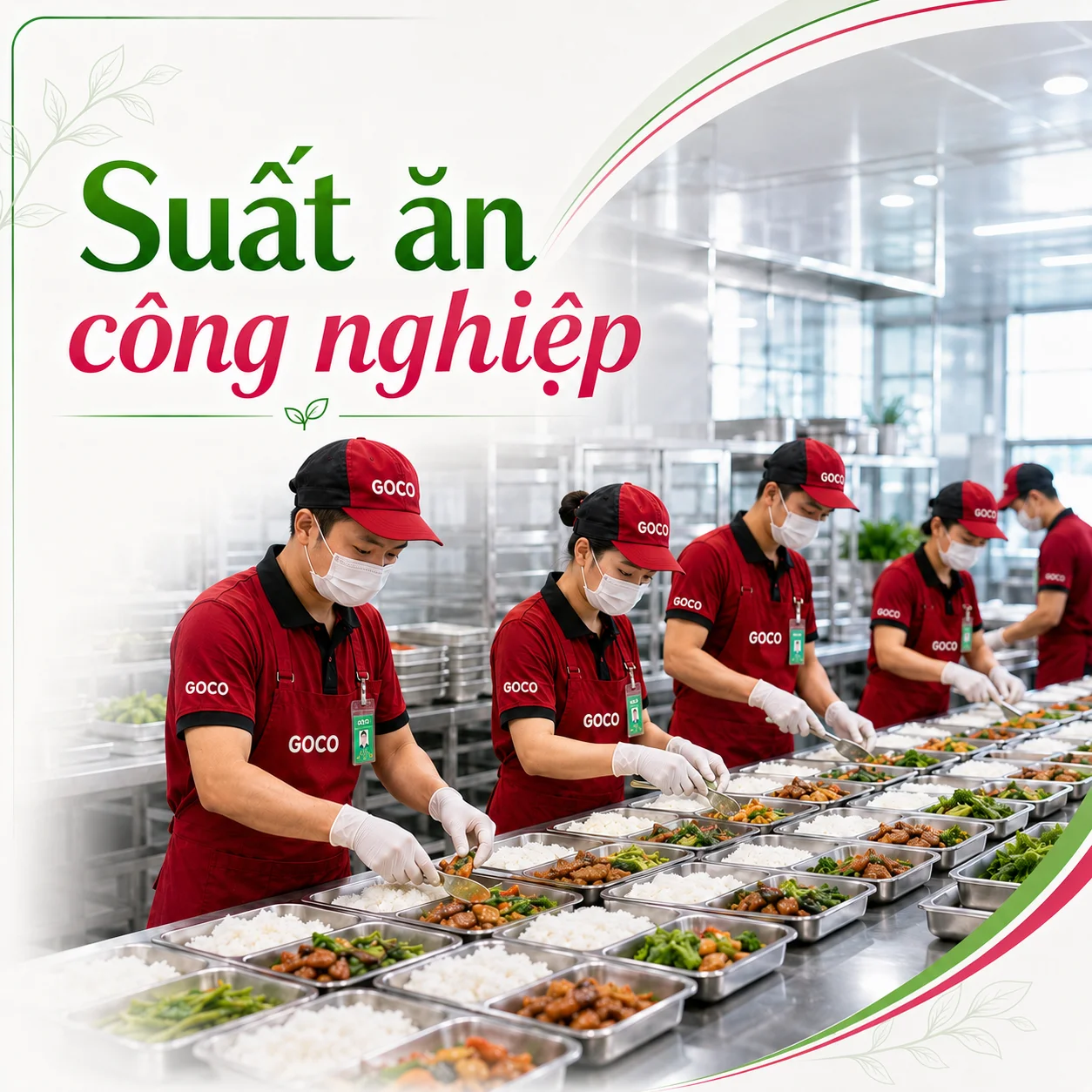
Industrial catering is not simply high-volume cooking; it is a coordinated operating system that must deliver safe, consistent and satisfying meals every day.

Đọc tiếng Việt
Industrial Catering
50+Project implementation
20+Provinces and cities
500+Employees
200,000+Meals every day
CORE VALUE

A practical, controllable operating model

Every model is designed around actual client conditions rather than a generic package.

Forecast production from workforce and shift data

Converted into practical controls and measurable indicators.

Standardize recipes, yields and portion sizes

Converted into practical controls and measurable indicators.

Control food safety at every process stage

Converted into practical controls and measurable indicators.

Design menus around user needs and work demands

Converted into practical controls and measurable indicators.

Review performance through measurable indicators

Converted into practical controls and measurable indicators.

IN-DEPTH CONTENT

From assessment to operation and improvement

01

What Industrial Catering Must Deliver

Forecast production from workforce and shift data

A large workforce expects meals to arrive at the correct time, in the correct quantity and with dependable quality. Behind that simple expectation is a chain of forecasting, purchasing, preparation, cooking, transport, portioning and service activities that must work together without interruption.

A strong industrial catering model therefore combines food production with operational discipline. The service must remain stable during shift changes, overtime, seasonal demand, workforce fluctuations and site-specific access requirements.

For industrial catering, GOCO VINA converts these requirements into practical and auditable standards: defined inputs, clear ownership, operating records and a response process for deviations. Clients can therefore review performance through evidence rather than isolated impressions.
02

Assessment and Operating Requirements

Forecast production from workforce and shift data

The assessment phase clarifies the real requirements before a industrial catering service is designed. GOCO VINA reviews user volume, service windows, facilities, equipment, budgets, safety expectations and special operating conditions.

The output is more than a current-state description. The team identifies the gap between existing capability and the required outcome, then prioritizes items such as Site and demand assessment, Operating model and service plan, Menu and portion framework and Food-safety control program. Lower-priority investment can be placed on a roadmap to prevent unnecessary cost.

Each requirement is connected to an acceptance criterion and approval owner. This makes the implementation of industrial catering more transparent, reduces last-minute changes and creates a reliable baseline for post-launch evaluation.

03

From Workforce Data to Production Planning

Standardize recipes, yields and portion sizes

Reliable production starts with accurate information. Shift schedules, registered headcount, historical consumption, absenteeism and planned overtime should be translated into a daily production plan with an appropriate reserve level.

Standard recipes, yield calculations and portion tools help the kitchen convert that plan into repeatable output. This reduces both shortages and unnecessary overproduction while supporting fair portions across all serving points.

For industrial catering, GOCO VINA converts these requirements into practical and auditable standards: defined inputs, clear ownership, operating records and a response process for deviations. Clients can therefore review performance through evidence rather than isolated impressions.
04

Food Safety Across a High-Volume Process

Control food safety at every process stage

High volume increases the importance of disciplined control. Ingredient receiving, storage, thawing, preparation, cooking, holding and service must follow documented procedures with clear responsibilities at every stage.

Traceability records, temperature checks, cleaning schedules and corrective-action rules allow the operator to respond quickly when a deviation occurs. The goal is not only compliance but also confidence for the client and the workforce.

For industrial catering, GOCO VINA converts these requirements into practical and auditable standards: defined inputs, clear ownership, operating records and a response process for deviations. Clients can therefore review performance through evidence rather than isolated impressions.

05

Resources, Coordination and Contingency

Design menus around user needs and work demands

A strong model only performs when people, suppliers, equipment, logistics and information are coordinated through one plan. GOCO VINA defines responsibilities, handover points and decision rights for common operating scenarios.

Resources are calculated around actual capacity rather than unnecessary excess. The plan includes primary capacity, reasonable reserves, ingredient or equipment alternatives and continuity procedures when volume or schedules change.

Direct client value includes Forecast production from workforce and shift data, Standardize recipes, yields and portion sizes, Control food safety at every process stage and Design menus around user needs and work demands. These outcomes are reviewed from mobilization and trials through full operation so that the model remains practical at site level, not only on paper.

06

Menu Design for Satisfaction and Performance

Design menus around user needs and work demands

Industrial menus should match the physical demands, work shifts and eating habits of the workforce. A balanced meal may include an appropriate energy source, protein, vegetables, soup and fruit, while seasoning and regional preferences influence acceptance.

A rotating menu cycle should create variety without making purchasing and production unnecessarily complex. Feedback, plate waste and dish popularity can be reviewed to improve the next cycle.

For industrial catering, GOCO VINA converts these requirements into practical and auditable standards: defined inputs, clear ownership, operating records and a response process for deviations. Clients can therefore review performance through evidence rather than isolated impressions.

07

How to Measure a Successful Service

Review performance through measurable indicators

Useful indicators include on-time service, planned-versus-actual meal count, food-safety compliance, waiting time, satisfaction and waste. These measures turn daily catering into a service that can be managed and improved.

Regular review meetings help the client and provider identify recurring issues, agree on actions and track whether changes improve both employee experience and operating efficiency.

For industrial catering, GOCO VINA converts these requirements into practical and auditable standards: defined inputs, clear ownership, operating records and a response process for deviations. Clients can therefore review performance through evidence rather than isolated impressions.

08

Implementation Roadmap, Reporting and Scalability

Clear roadmap and performance indicators

Implementation follows the stages of Assessment, Design, Mobilization, Operation and Improvement. Every stage has defined outputs, timing, ownership and exit conditions, allowing the client to review progress without managing disconnected tasks.

After launch, reporting focuses on indicators linked to quality, cost, stability and user experience. Exceptions are analyzed and converted into improvement actions with clear completion dates.

As requirements grow, industrial catering can expand by capacity, service point or scope. Using accumulated operating data reduces the need to redesign the whole system and supports consistent standards across each growth stage.

DELIVERABLES

What does the client receive?

The scope is documented for review, acceptance and continued operation.

✓Site and demand assessment
✓Operating model and service plan
✓Menu and portion framework
✓Food-safety control program
✓Staffing and training plan
✓Performance reports and review
DELIVERY PROCESS

Clear stages from assessment to improvement

01

Assessment

We review demand, users, facilities, service windows and operating constraints.

02

Design

We define the menu framework, workflow, staffing and quality-control model.

03

Mobilization

We prepare people, suppliers, equipment, documentation and launch plans.

04

Operation

The service runs through standardized production, supervision and reporting.

05

Improvement

Data, feedback and audits are converted into practical improvement actions.

FAQ

Questions before implementation

These answers help organizations prepare information and define the next step.

Who is Industrial Catering designed for?

Industrial Catering can be adapted for organizations with different workforce sizes, facilities, service schedules and quality expectations. GOCO VINA assesses the real operating environment before proposing the final model.

Can the service be customized to our budget and site conditions?

Yes. Menu structure, production model, service format, staffing and equipment requirements can be adjusted while protecting essential food-safety and quality standards.

How does GOCO VINA control daily quality?

Daily control is supported through approved suppliers, standardized recipes, hygiene procedures, temperature records, supervision, incident handling and periodic performance review.

How long does implementation take?

The timeline depends on site readiness, required equipment, recruitment, approvals and service scale. A mobilization plan is agreed after the initial assessment.

GOCO VINA

Planning industrial catering for your organization?

GOCO VINA assesses your requirements, designs the model and supports implementation, operation and continuous improvement.

Request consultation